Neighbourhoods
Where to stay in Marrakech: medina, Gueliz, Palmeraie or countryside
An honest comparison of the four options, including the faults of our own. What each area costs you in travel time, in noise and in the feeling of being somewhere else.
Updated 21 August 2026 4 min read By Les Dars de Marrakech
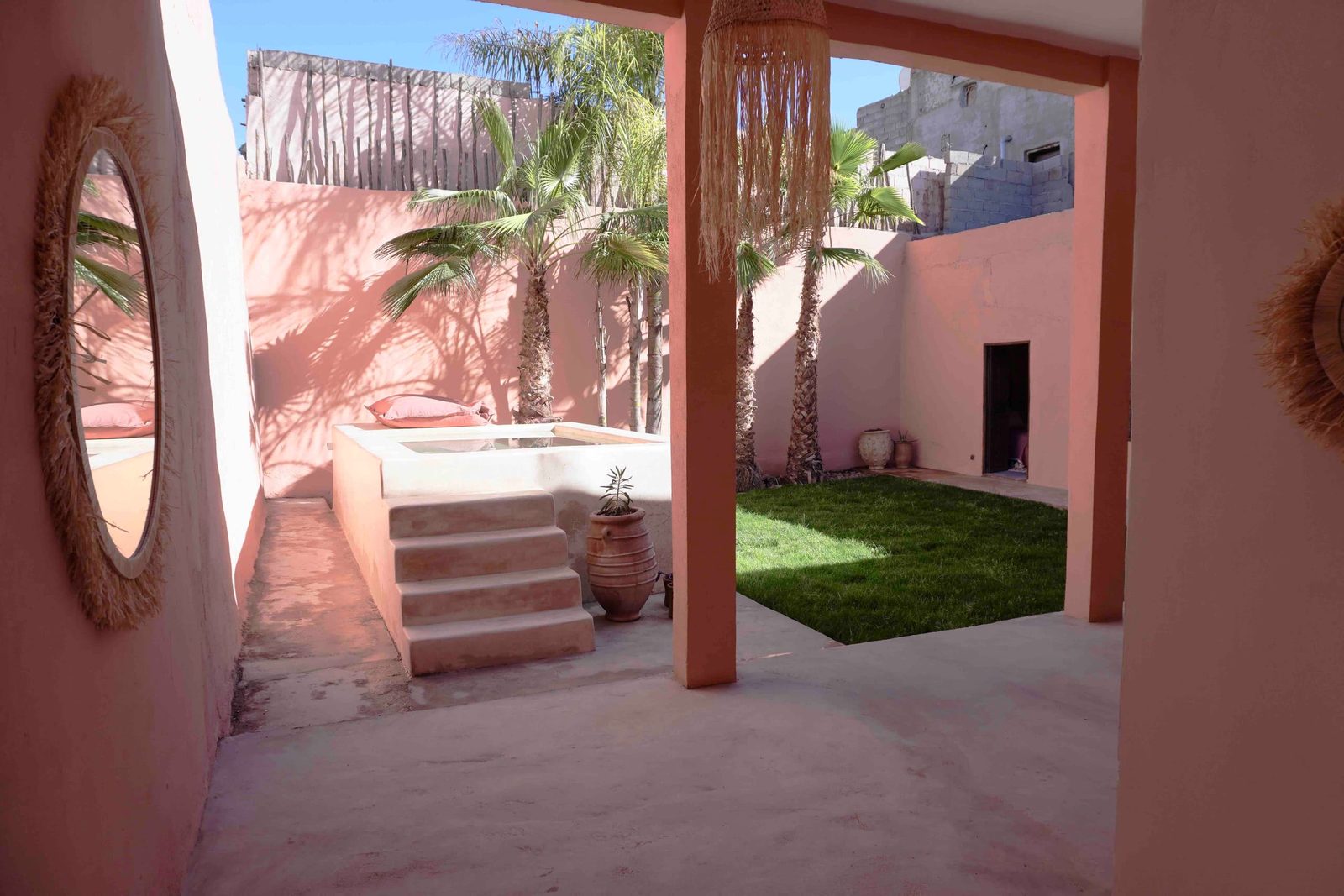
Medina if you want to walk. Gueliz if you want restaurants and relative calm. Palmeraie if you want a hotel with a pool ten minutes from the centre. Countryside if you want space and you accept the car.
We keep a house in the fourth category. The bias is there, so it may as well be stated before the comparison.
The medina
The historic heart, inside the ramparts. Riads, lanes, souks, Jemaa el-Fna.
For. Everything is walkable, and nothing replaces that. You step outside and you are in it. In the evening you walk home after dinner without a thought for the car. The riads there are often superb, and the architectural experience, courtyard, tadelakt, roof terrace, is not available anywhere else.
Against. It is dense and loud: scooters in lanes 1.5 metres wide, deliveries at dawn, restaurant touts calling. Patios are narrow and tall, so plunge pools stay cold even in summer. You generally share the house. And arriving by car is a sport: plenty of addresses are not reachable, you park at the ramparts and finish on foot or by cart.
Who it suits. A three to five day stay, no toddlers, no car, built around the city.
Gueliz
The new town, laid out by the French from 1913, with avenue Mohammed V as its spine. Art galleries, concept stores, cafés, restaurants, and the Marché central where people from Marrakech do their shopping at marked prices.
For. Urban comfort without the medina’s racket. Restaurants where you eat well without being hustled in. Pavements, which matter more than you would think with a pushchair. Two to three kilometres from Jemaa el-Fna, so ten to fifteen minutes in a petit taxi for 15 to 30 dirhams.
Against. It does not feel foreign. You sleep in a 1970s block or in a recent development. If you came for elsewhere, you will get it during the day and not on the way back.
A tip worth real money: plenty of travellers buy their spices and argan oil in the souks at three or four times the price, when the Marché central in Gueliz sells them at fixed prices. Benchmarks: argan oil 70 dirhams for 100 millilitres, ras el hanout 50 dirhams for 100 grams, mid grade saffron 40 dirhams a gram.
Who it suits. A cautious first trip, a business trip, a family that wants simple logistics.
The Palmeraie
A palm grove of Almoravid origin, roughly 13,000 hectares to the north east, now largely built over: hotels, developments, villas with pools.
For. Space and a pool, fifteen minutes from the centre. It is the classic compromise of the four and five star hotels with spas. It is also the ground for motorised activities: quad bikes, buggies, camels.
Against. The image of a preserved oasis no longer matches reality. Between the housing estates and the waste ground, what you get is a shaded suburban district. And as everywhere outside the medina, you need a vehicle or you pay for rides.
One specific trap: the camels offered at the roadside on the Fès and Casablanca roads come with no price announced. They sit you up, walk 200 metres and ask for 300 dirhams, with the animal standing and you on top of it. Agree the price, the duration and the route before you get on.
The countryside, the douars
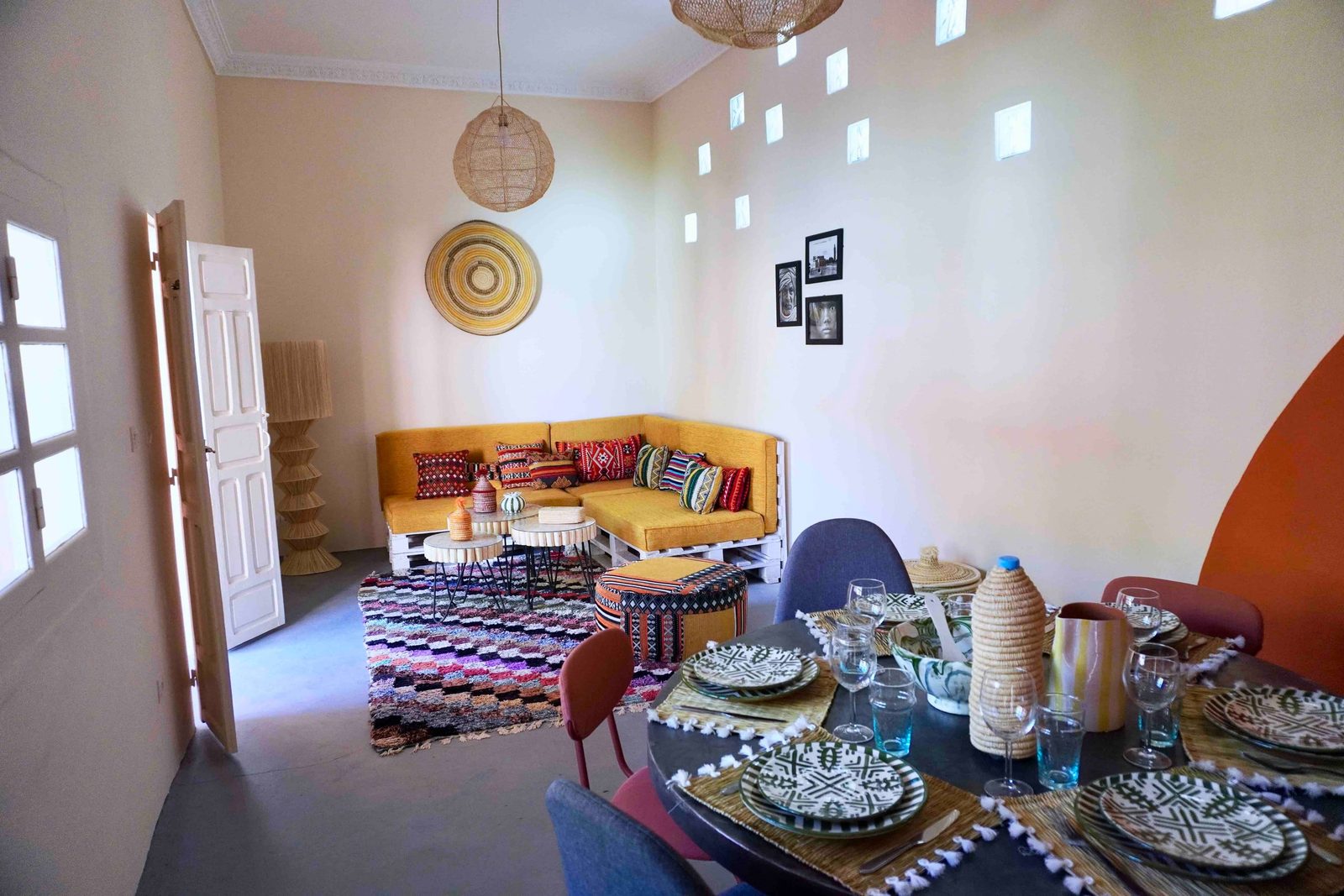
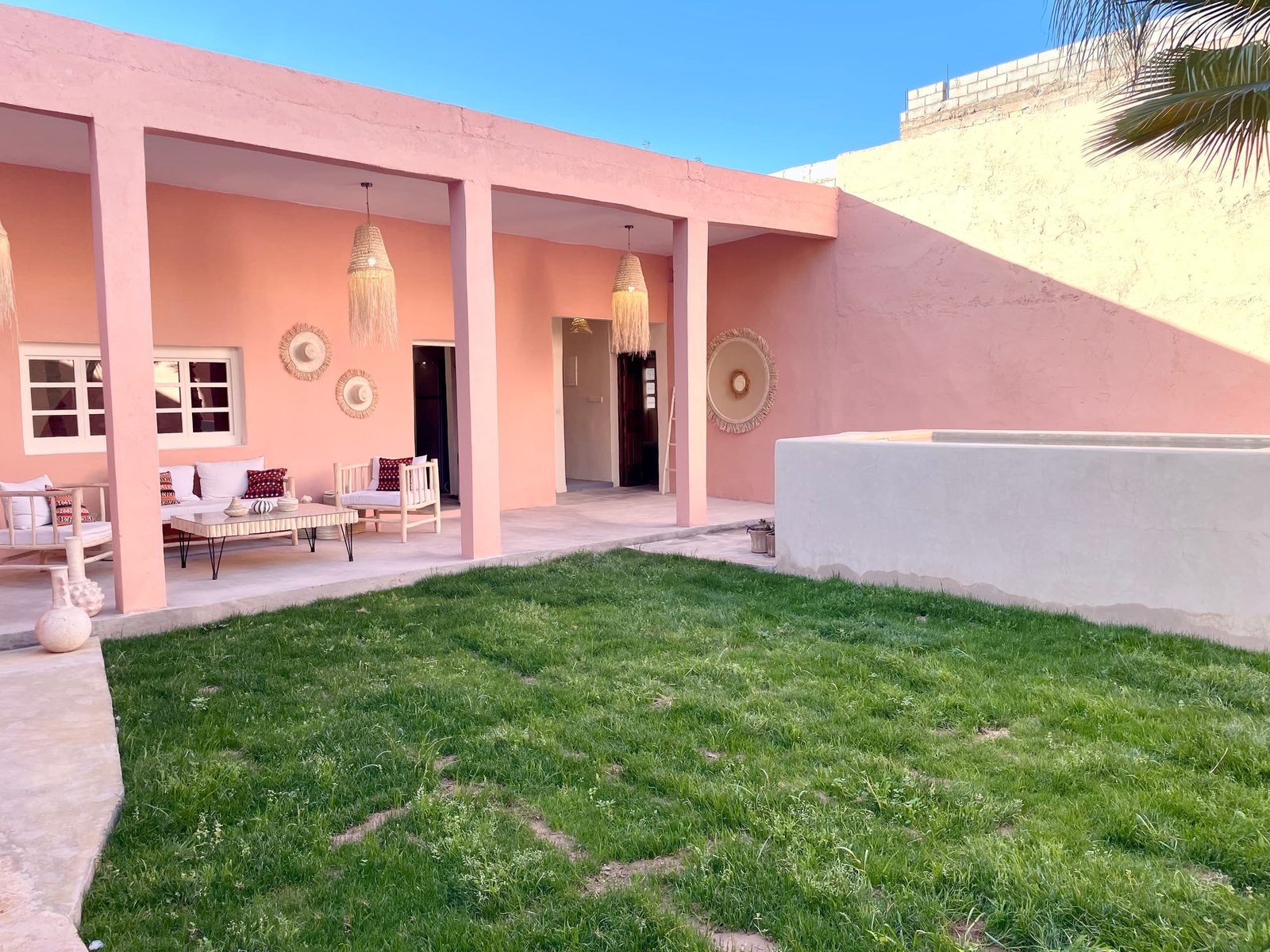
This is where we are, ten kilometres to the south east. A douar is a rural hamlet: earth houses along a track, a mosque, a communal bread oven, two or three grocers, a butcher, a greengrocer.
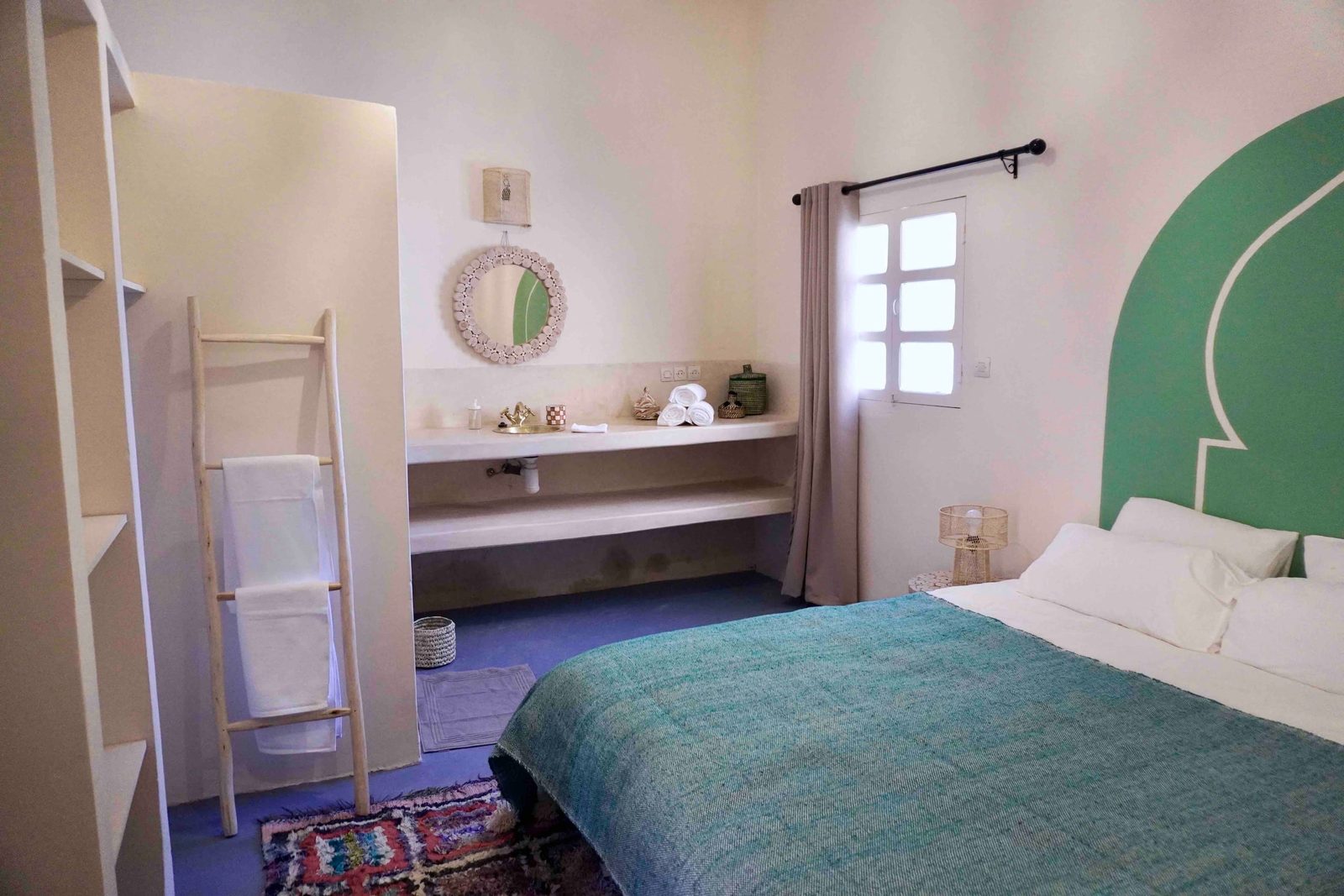
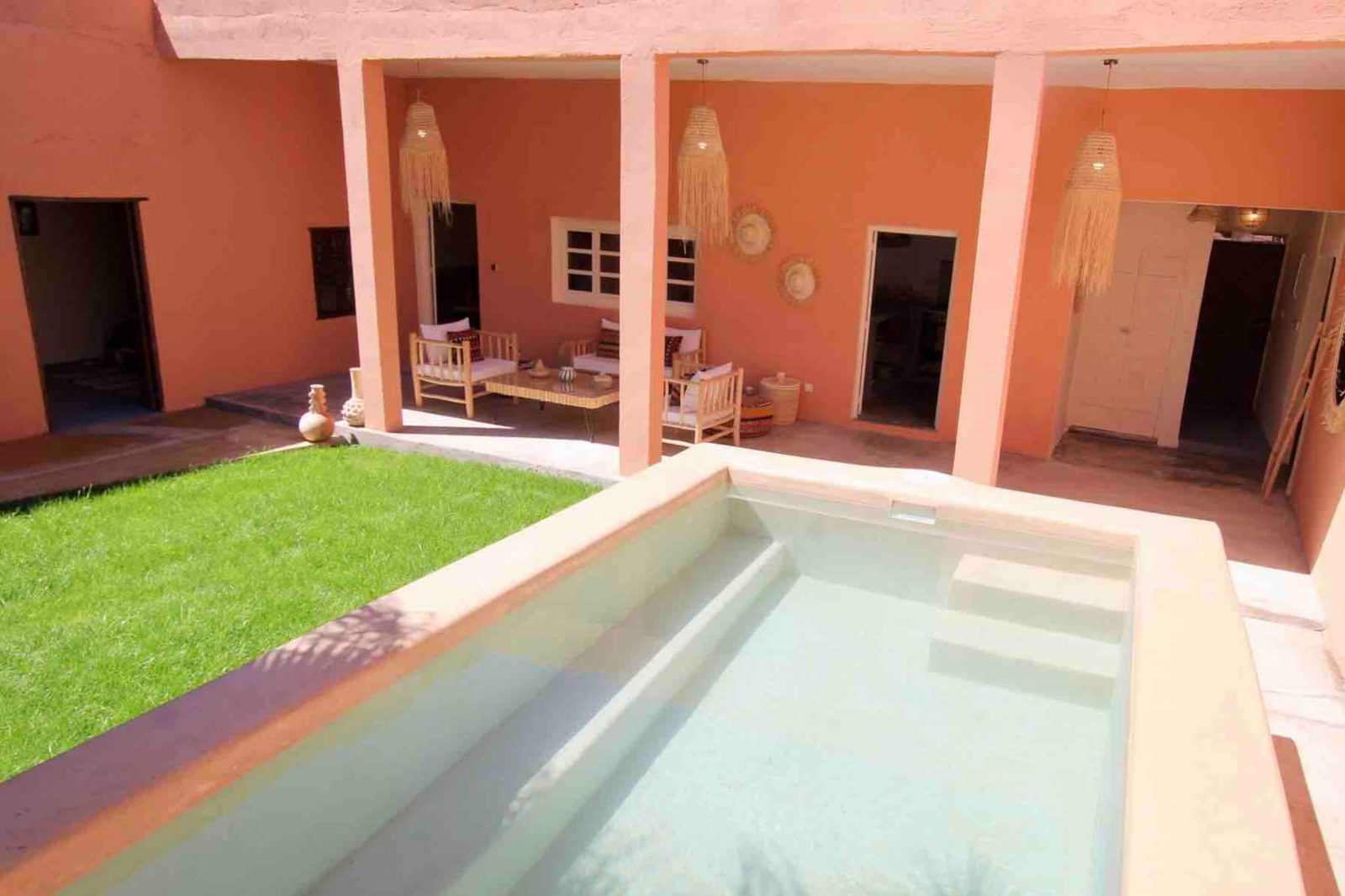
For. The silence, and it is total. Not one of our 64 reviews mentions night time noise. The space: three bedrooms, three shower rooms, a garden, a pool of your own, for the price of a riad bedroom. The chance to cook, with shops within walking distance. And daily life that is not staged for anyone: bread from the village oven, the same faces every day, neighbours who say hello.
Against, and this is the real subject. The car is not optional. Allow twelve to seventeen minutes to Jemaa el-Fna depending on the hour. The area is working class and has not been tidied up for tourists: waste ground borders some of the streets and there is litter, which one of our guests wrote plainly before adding that the people are kind. There is no corner shop open at midnight: you do your shopping on the way home.
Airbnb puts a number on it: 4.6 out of 5 for location, against 4.8 for cleanliness and 4.9 for communication. It is our only line under 4.7. It marks a choice, not a fault.
Who it suits. A group of four to six, a family with children, a stay of a week or more, someone who rents a car and comes looking for rest as much as for sightseeing.
The other names people will quote at you
- Hivernage: between Gueliz and the medina, luxury hotels, a casino, wide avenues. Quiet, expensive, with no particular character.
- Agdal: a residential district to the south, recent blocks, little tourist interest.
- Targa: residential to the west, villas, nothing to do on foot.
- Amelkis and the Ouarzazate road: golf courses and high end villas, a long way out, you genuinely need a car.
- The Ourika road and the Fès road: the countryside axes. This is the sector of houses with gardens, ours included.
The table, to settle it
What the stays that work have in common
Travellers who stay a week and go home happy have nearly all done the same thing: they moved halfway through. Three nights inside, four nights outside. An hour of logistics and a taxi fare.
The ones who hold out seven days in the medina come back wrung out. You can tell from their review: they mention the noise before they mention the souks.