Budget
What a hire car in Marrakech really costs, line by line
A week with a car in Marrakech costs between 1,700 and 3,800 dirhams all in, depending on your choices. Every line, the fees you only meet at the desk, and seven costed levers.
Updated 26 August 2026 6 min read By Les Dars de Marrakech
A week with a car in Marrakech costs between 1,700 and 3,800 dirhams all in, roughly 160 to 350 euros, for a city car in low season with no long distance excursion. That the total can double has nothing to do with the advertised hire price: it comes from fuel, from the desk supplements and from the excess waiver, three lines nobody compares before booking.
Every figure below was checked in August 2026. They will move.
The hire price, and the spread between firms
This grid matters less than the spread. Over the same week in September 2026, for the same vehicle:
More than double the spread for the same car on the same dates. Thirty minutes of comparison are worth two hundred euros here. It is the most profitable lever in this whole article, and it is also the one people skip.
Local firms sit around 180 to 230 dirhams a day in low season, against 220 to 280 for an international brand, with a rise of 25 to 40% in high season.
Fuel, the line people underestimate
As of 17 August 2026: unleaded petrol at 14.90 dirhams a litre, diesel at 14.87, roughly 1.38 euros. Prices are unregulated and revised twice a month, on the 1st and the 16th. No published figure that comes without its date is worth anything.
On a basis of 6 litres per 100 kilometres, to be raised by 15 to 25% in the mountains:
A typical week with three medium excursions and four days in the city works out at around 500 to 700 dirhams of fuel. A week with Essaouira and Ouarzazate goes past 1,200 easily.
In the countryside and at small stations, cash is still the norm and the card terminal is often out of order. Fill up before leaving the city.
The deposit, not a cost but a sticking point
1,000 to 2,000 euros, as a card hold on a credit card in the driver’s name. With some firms the range climbs to 3,000 depending on the category.
Three things to know. Debit cards are very often refused, which strands people at the desk every day. The sum is held for the whole hire period, so it eats into your payment limit for the stay. And with small firms the deposit is sometimes taken in cash or by cheque: that is the case where a dispute becomes impossible to settle, and it is reason enough to go elsewhere.
The release time quoted is 48 to 72 hours. It is frequently overrun by several weeks.
Insurance, and the word that misleads
Compulsory third party cover is included. The rest is optional and sold dear.
The two orders of magnitude do not match, which says enough about how transparent the sector is. Allow 15 to 25 euros a day for a full excess waiver, so 100 to 175 euros over the week, sometimes more than the hire itself.
"Zero excess" does not mean "no risk". The usual exclusions cover tyres, windows and the windscreen, the sills, the roof, the interior, the mirrors, driving on unsurfaced tracks, off road driving, alcohol and gross negligence.
And the clause that costs the most, the one almost nobody reads: a police report is frequently required before the excess waiver applies at all. A driver who settles a bump amicably at the roadside loses their cover. If the insurance is going to be involved, call the police, even for a light knock.
Deadlines to respect: declaration to the insurer within 5 working days under the Moroccan insurance code, accident report form handed to the agency within 72 hours.
The desk supplements
They are what take a quote from 162 euros to 240.
Plenty of Marrakech rental firms deliver to your address for free. Asking for delivery on site removes the airport surcharge, removes the risk of an out of hours pickup if your flight lands late, and saves you from driving through the city on arrival day, straight off a flight, with no bearings. It is the best comfort for the money on the whole list, and it costs nothing.
Parking and fines
The city of Marrakech has set the rate for street parking attendants at 2 dirhams by day and 4 at night, whatever the duration, with more than a hundred signs put up on the main streets. The price actually asked for is often higher, and the city has already picked up an attendant after a video of abusive rates near Jemaa el-Fna.
Handing over 5 to 10 dirhams for half a day avoids friction. Knowing the official rate stops someone asking you for 50. Allow 50 to 100 dirhams of parking over the week.
Fines are settled on the spot, in cash:
Always insist on an official receipt. No receipt means it is not a fine.
The full budget, two scenarios
One week, low season, a house 10 kilometres from the centre, three medium excursions.
A couple, city car, no full excess waiver
A family of five, estate or small SUV, full waiver
That is 91 euros a head over the week in the second case, all in. Worth setting against the alternatives below before you decide.
The alternatives, costed
The sum to do. For two people, the private driver costs more than the hire, but it removes the driving, the parking, the 1,500 euro deposit and the argument at handback. From four people up, it becomes competitive per passenger.
The shared excursion is unbeatable on price and is paid for in time: on a day out at 20 euros, allow one to two shopping stops of thirty to forty-five minutes, so an hour and a half less at the site you came to see. Nobody is scamming you. The operator’s margin sits there, not in the ticket price.
The seven levers, in order of return
- Compare three firms. Spread recorded from 162 to 379 euros over the same week. Potential saving: up to 200 euros.
- Ask for delivery to your address. Removes the airport fees and the out of hours surcharge. Saving: 200 to 800 dirhams, and a lot less fatigue.
- Decide about the full excess waiver. Over seven days it weighs 100 to 175 euros. If your credit card already covers vehicle hire, you are paying twice. Check before you leave, not at the desk.
- Group the long excursions. Essaouira and Ouarzazate cost more than 700 dirhams of fuel between them. If you only do one of the two, the car becomes less obvious than a coach or a driver.
- Take a city car. The 4x4 only earns its keep if you go up the Zat or Kik tracks, and most contracts specifically ban tracks for vehicles that are not 4x4s. So you often pay for a 4x4 to do something the contract forbids.
- Fill up in the city, not on the road and not at the airport.
- Film the vehicle through 360 degrees at pickup and at return. It saves no money, it stops you losing some: it is the only evidence that holds up over a disputed scratch.
What changes when you sleep outside the walls
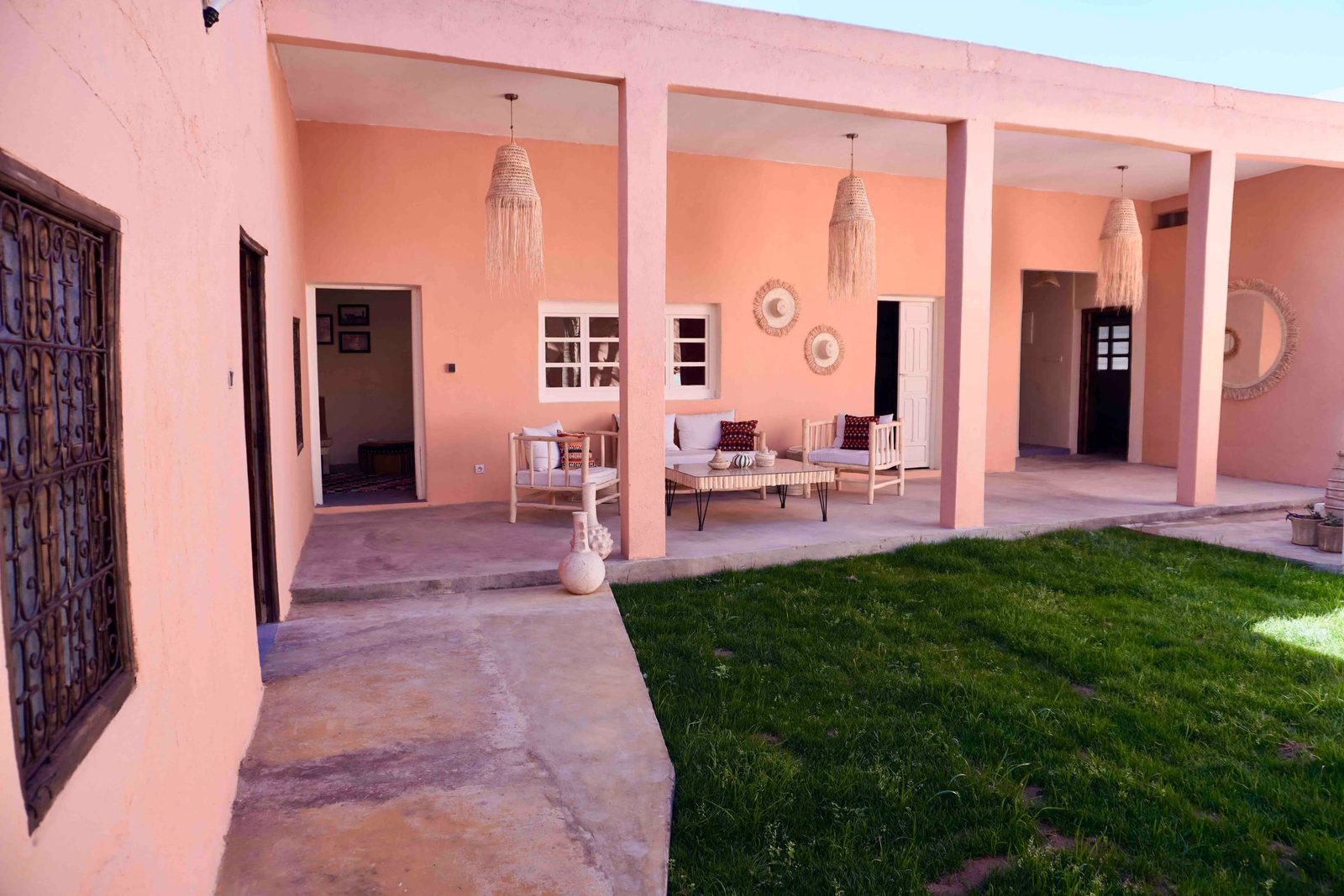
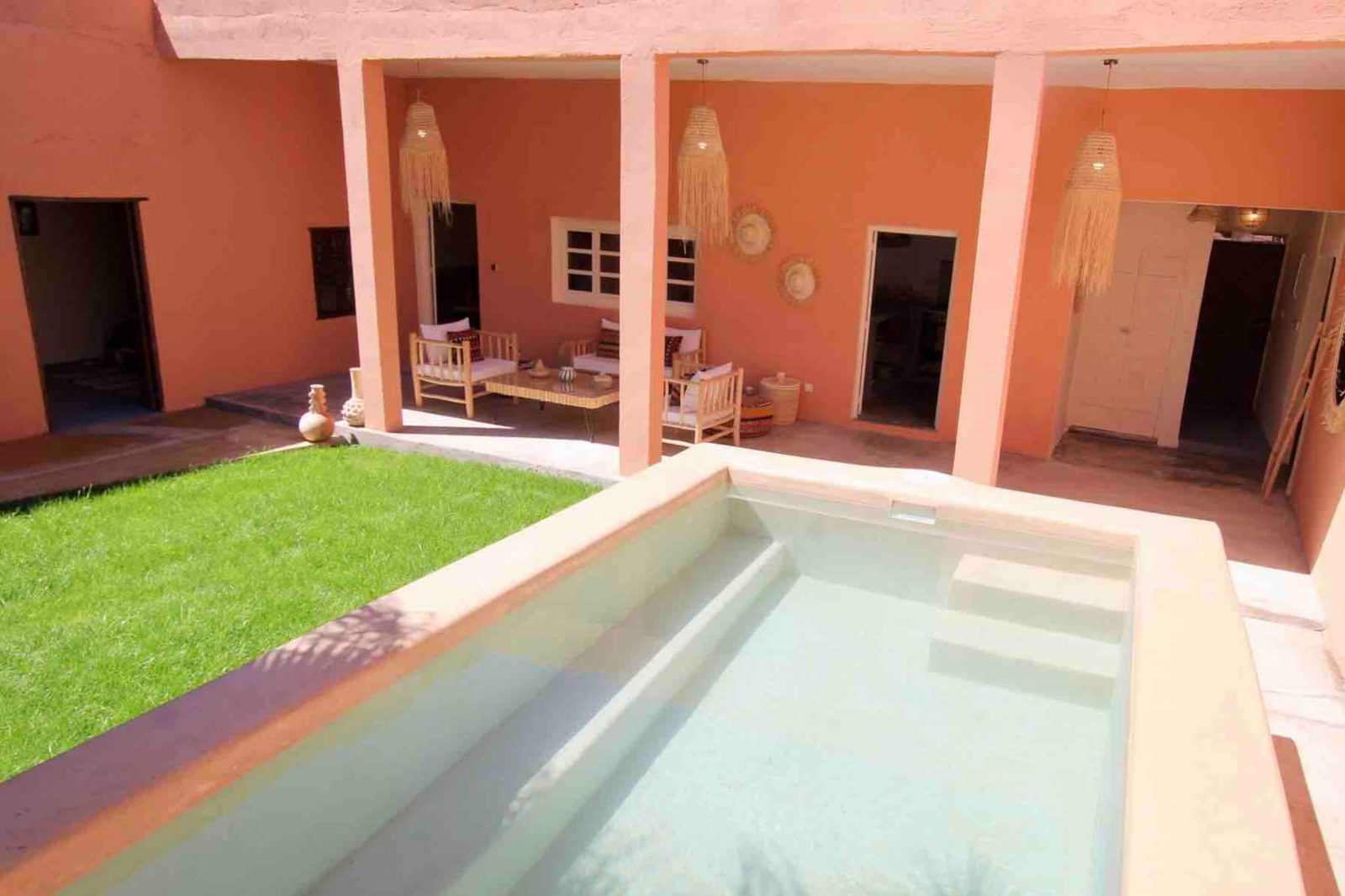
Out here, ten kilometres from the centre, the car is not a comfort. One guest put it in three words in her review: vehicle absolutely essential.
But that budget line is paid back elsewhere. With a bread oven, a greengrocer and a butcher within walking distance, plenty of our guests eat at home most of the time. Over a week for six, that line weighs more than the car hire. And the carport is free on site, while a supervised car park in the medina is paid for every day.
So the real trade off is not "car or no car". It is where you sleep, and the car is only one of the consequences of that choice.