Events
Marrakech Marathon: where to sleep when the gun goes at 7.45
The 37th edition starts on Sunday 31 January 2027 at 7.45, on avenue de la Menara. The course is flat. What costs you minutes is Saturday night and the 6.30 drive.
Updated 31 August 2026 4 min read By Les Dars de Marrakech
The 37th Marrakech International Marathon starts on Sunday 31 January 2027 at 7.45, on avenue de la Menara, behind the Sofitel. The course is certified over 42.195 kilometres, flat, with a few false flats through the palm grove. The half sets off an hour and a half later, at 9.15.
The course will cost you nothing. Saturday night will.
Sunday, in figures
Start and finish are in the same place, on avenue de la Menara. The route passes the Koutoubia, runs along the twelfth century walls and crosses the Menara gardens. More than fifteen thousand runners are expected. The race has existed since 1987 and is held under the King’s High Patronage.
That 5 hour 30 cut-off deserves a second look. It is generous for a first marathon. It is not generous if you walk the second half.
Saturday is not a rest day
Bibs are collected on Friday 29 and Saturday 30 January, from 9.30 to 19.30, on place de la Koutoubia, under the organiser’s marquee. Passport required.
So you go into the medina the day before. On foot, on cobbles, in a crowd, on a Saturday. Plenty of runners lose two hours there without noticing, between the journey, the queue and the detour through the souks since they are there anyway. Those two hours on your feet are paid back at the thirtieth kilometre.
The fix is one sentence: collect the bib on Friday. The marquee opens at 9.30 on both days, and on Friday it is empty.
What January does to a body at seven in the morning
Official January normals for Marrakech, NOAA series 1991 to 2020: 19.1 degrees maximum, 5.9 minimum, 25 millimetres of rain across 3 days, 7.4 hours of sunshine a day. The coldest figure on record is minus 3.6.
That is two races in one morning. At 7.45 you are at six or seven degrees in the shade, and the sun takes a while to clear the walls. By eleven, on the closing kilometres, you are at fifteen or sixteen in full sun. A runner dressed for the start suffers at the finish, and the other way round is worse.
The local habit is an old tee shirt over the kit, thrown away in the first kilometre. Pack something warm in the bag as well: waiting after the finish, still and soaked, at fifteen degrees, chills you fast.
The real subject: the Sunday morning drive
Gun at 7.45, pens open before that, warm-up, bag drop. You need to be there by 6.45. Which means waking between 5 and 5.30, and a breakfast nobody will serve you at that hour.
This is the part accommodation never mentions, and it weighs more than the distance to the start.
Staying in the medina. You are twenty minutes on foot from avenue de la Menara. No transport to arrange. In exchange you sleep above a street that stays up late, and Saturday is the worst night of the week for it. Ask for a room on the patio, never on the street.
Staying in Guéliz or the Hivernage. The best raw compromise: ten minutes by taxi, quiet buildings, cafés open early. Room prices climb over that weekend, so book before November.
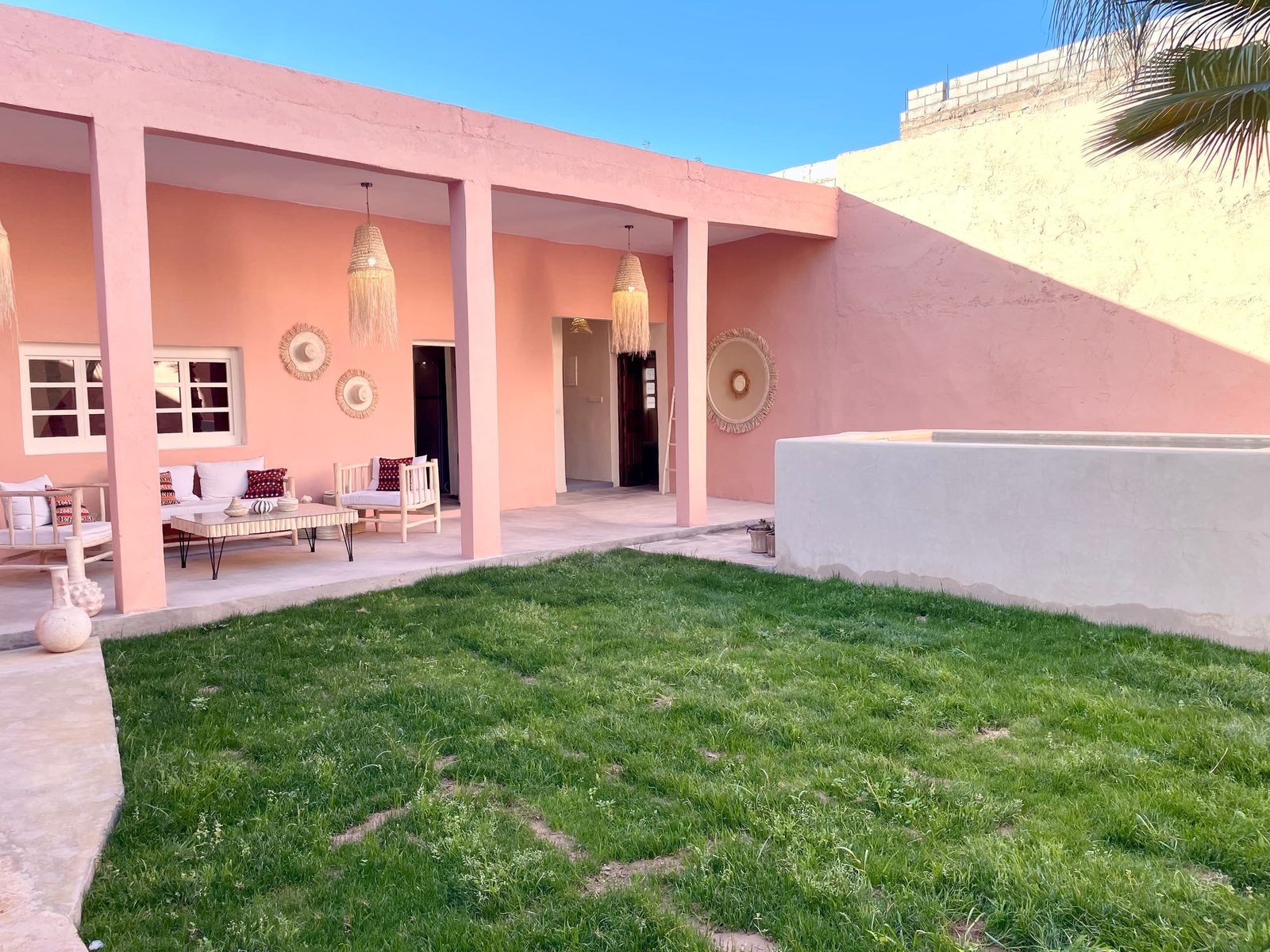
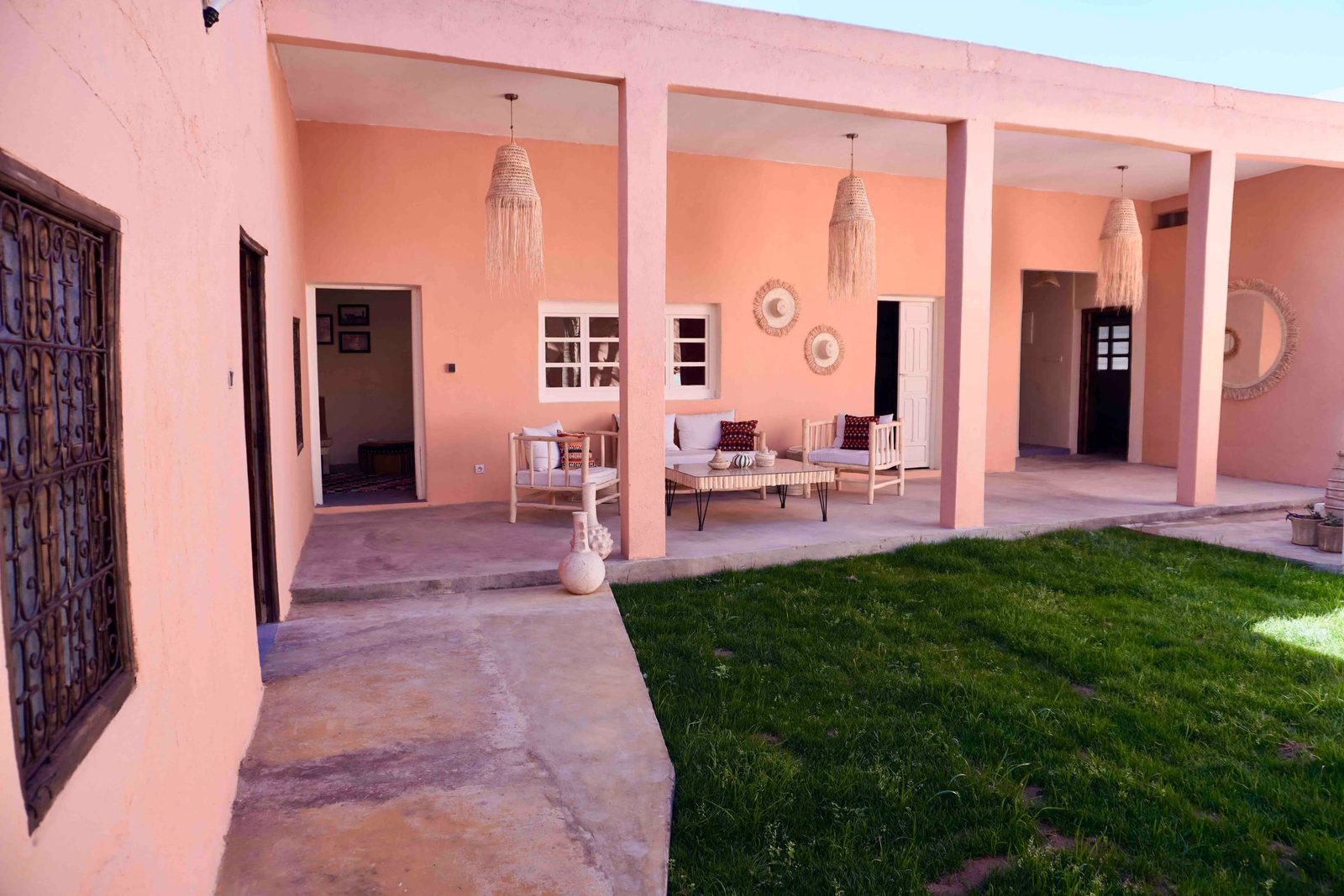
Staying outside the walls. The silence is real, and silence is what you want the night before a race. So is the cost: you need a car, or a driver booked for 6.15. Do not count on finding a taxi in a hamlet at that hour, because it does not happen. Allow fifteen to twenty minutes of road on a Sunday morning, while the city is still asleep.
That is our case, and we do not sell it as an advantage for race day. It is one for the four days that follow.
What happens after the finish
A marathon wrecks your legs for three days. Stairs become a decision, and a medina is made of stairs. A three storey riad with no lift, a room on the top level, uneven steps: Monday morning turns into an event.
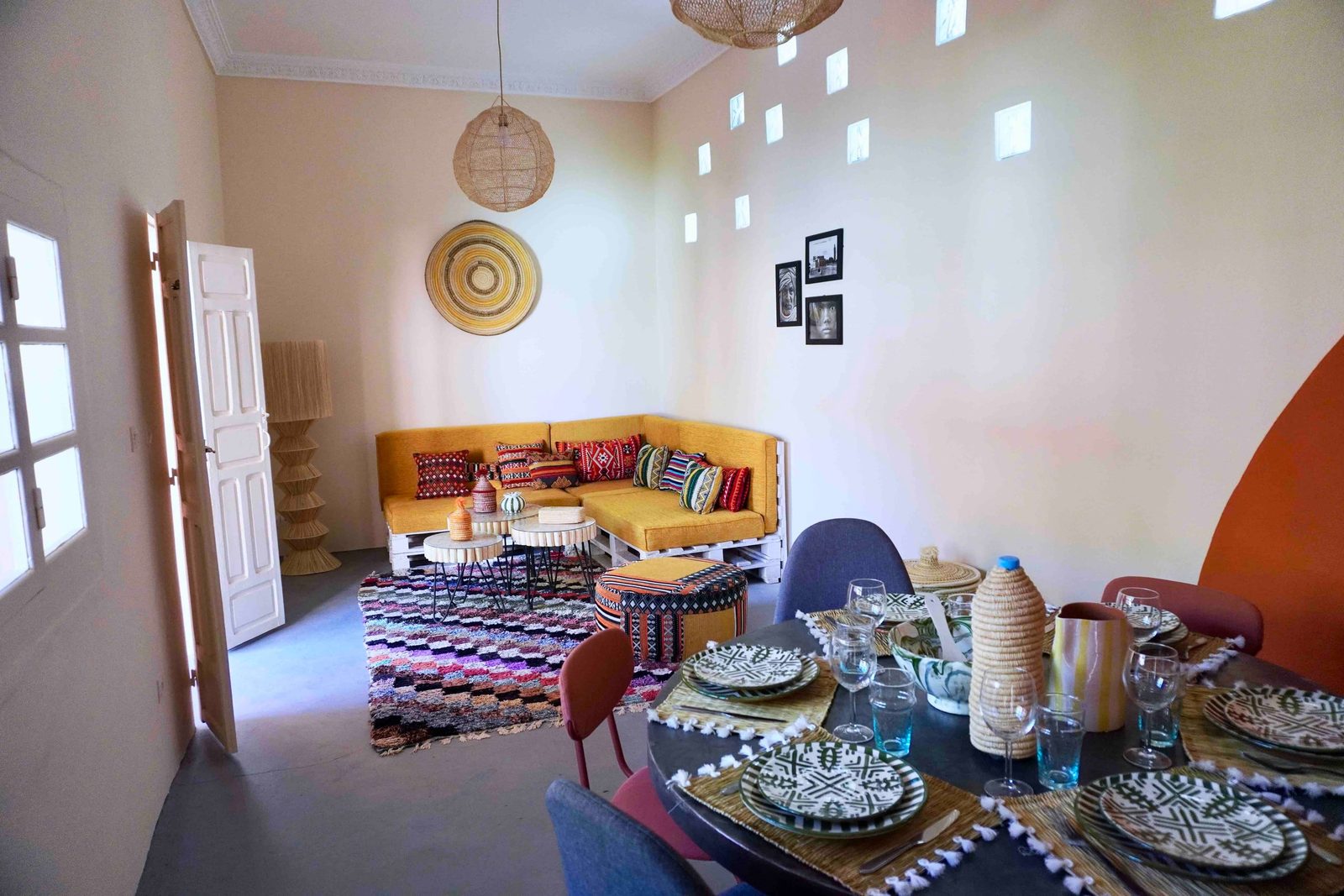
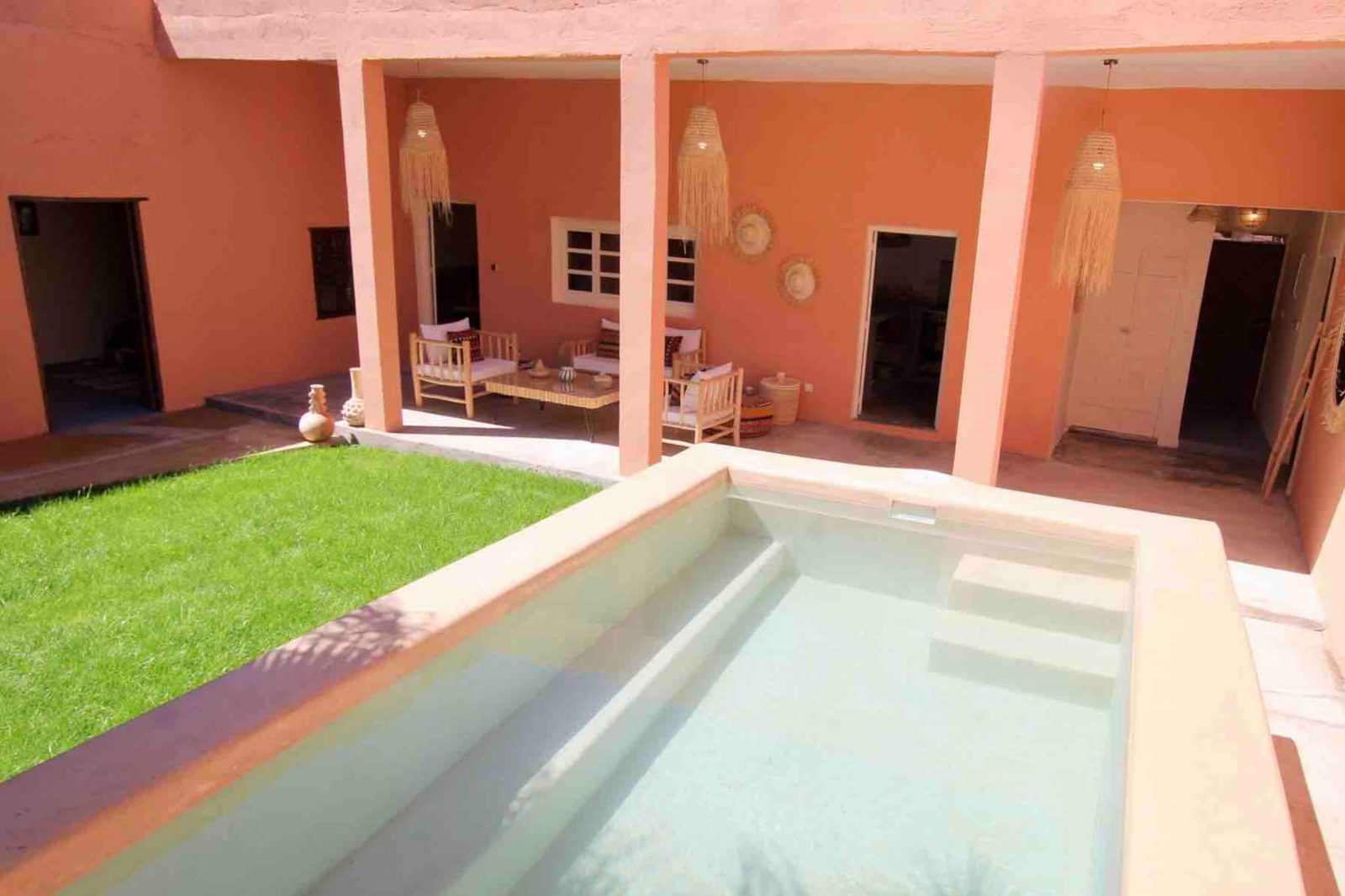
This is where the maths flips. A house with its bedrooms on one level, and a cold pool to drop your legs into, is worth more on 1 February than twenty minutes of walking saved on 31 January.
January water sits around thirteen degrees in an unheated pool. For muscle recovery that is exactly the right temperature, and it is the only time of year anyone can write that.
Booking
Marrakech hoteliers have known the race dates forever. Decent inventory goes in October and November. By late December what is left is what nobody wanted, at New Year prices.
One last thing, whatever you book. Check that breakfast can be served at 5.30, or that a kitchen is available to you. Plenty of places advertise service from 7, which is no use at all when the gun goes at 7.45.