Vocabulary
Riad, dar or villa: what the words really mean, and which one suits you
A riad has a planted inner garden, a dar has a paved patio, a villa has an outdoor garden. The tourist industry calls almost everything a riad. That confusion costs people their holiday.
Updated 25 August 2026 4 min read By Les Dars de Marrakech
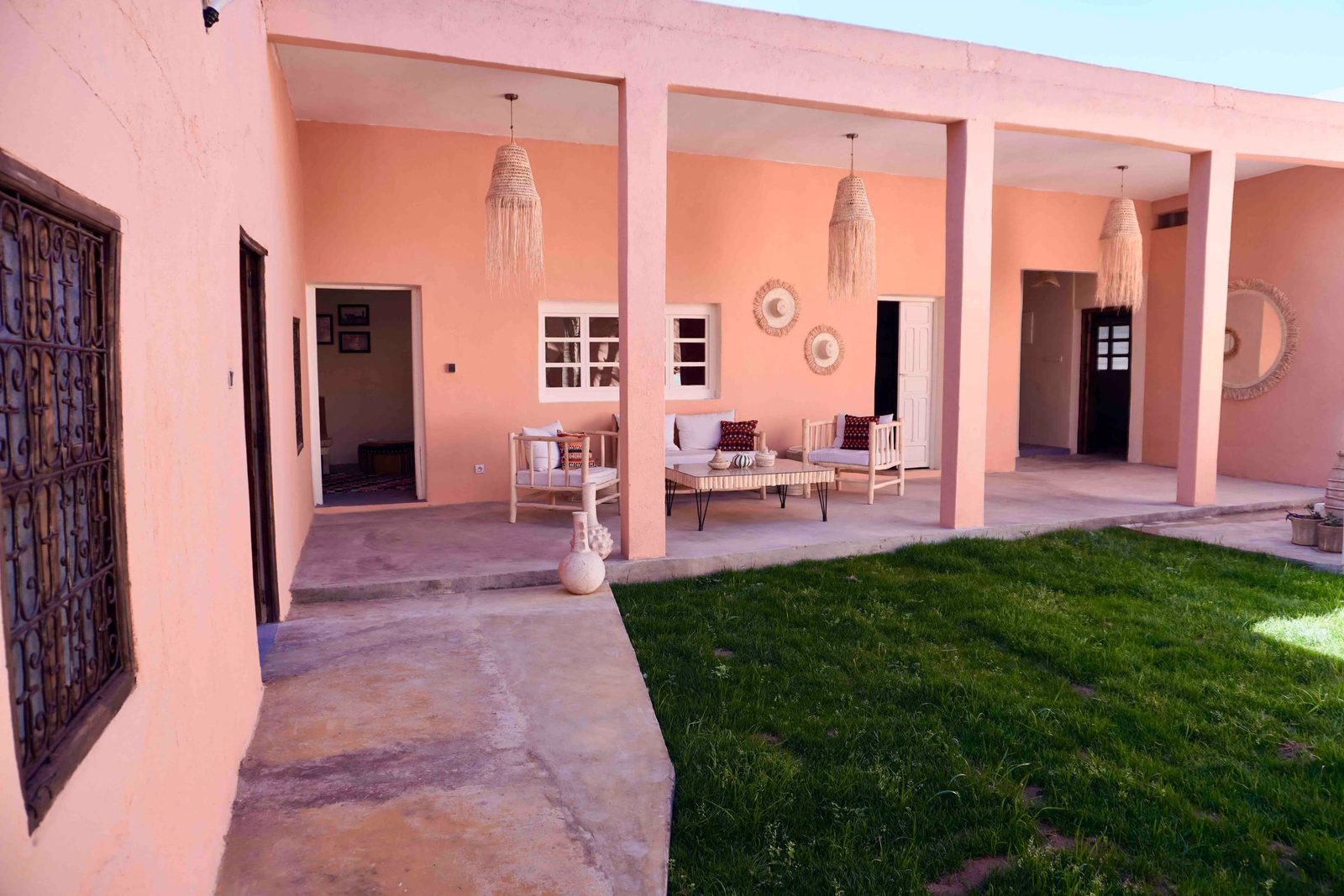
A riad is a courtyard house whose inner court is planted, traditionally in four squares around a fountain. A dar is a courtyard house with a paved court and no garden. A villa is a modern build with an outdoor garden and usually a pool. Three words, three different architectures, and the tourist industry treats them as synonyms.
This is not a scholarly quarrel. The word you type decides where you sleep, and therefore decides the shape of your trip.
Where the words come from
Riad comes from the Arabic riyāḍ, the gardens. The word names the garden before it names the house. The court is divided into four beds by paths that cross, with water at the centre. Orange trees, jasmine, banana plants. The house turns its back on the street and opens onto that garden alone: an architecture of the inside.
Dar simply means house. A dar has a courtyard too, but a tiled one, with a few pots at best. It tends to be smaller, plainer, more lived in.
Villa is not an Arabic word. It is a twentieth century build, outside the ramparts, with a garden that wraps around the house instead of being locked inside it.
The practical trap
On the rental platforms, more or less anything with a courtyard sells itself as a riad, and so does more or less anything with a pool. The word has become an argument, not a description.
Vocabulary is not the problem. What the word promises is. Someone looking for a riad is almost always after the medina itself: step out of the door and be in the souks, walk home after dinner, own no car. Sell that person a "riad" ten kilometres from the centre and they get exactly what they did not want.
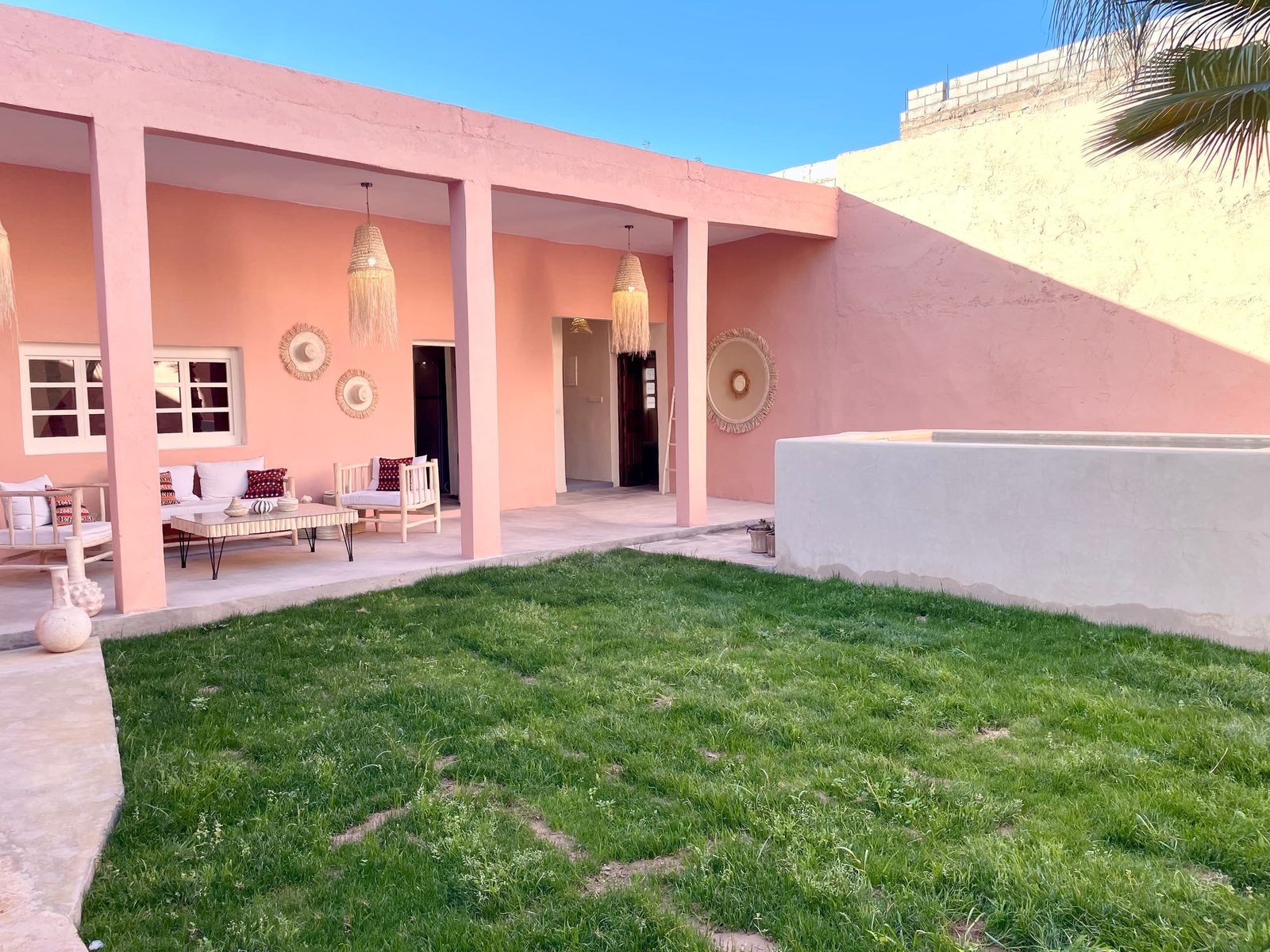
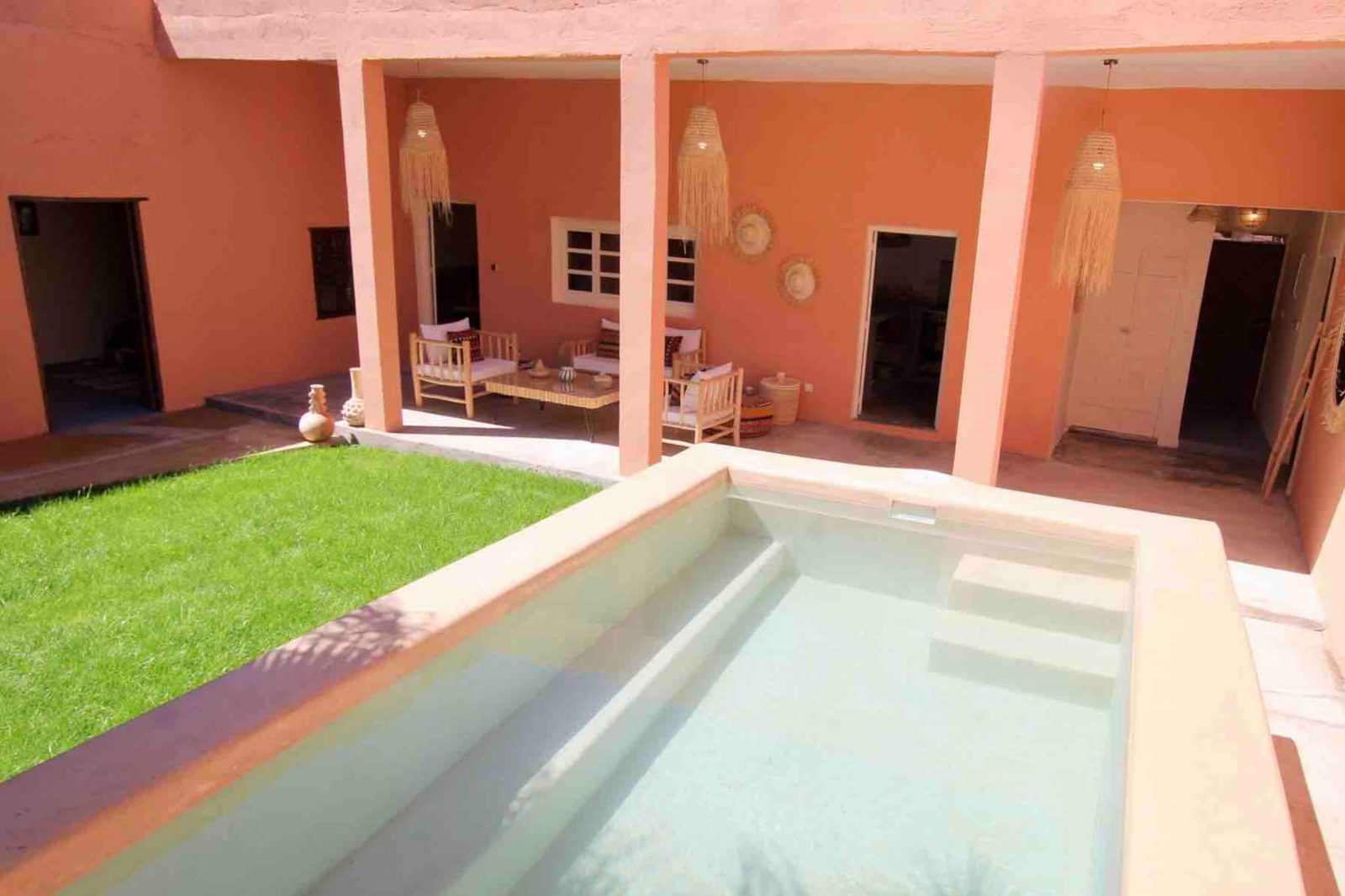
Our own Airbnb listing is titled "Magnifique Riad 3ch/6p Piscine". That is the word the market understands, and it is not entirely false: the house is built around a court and its gallery. On this site, though, we prefer to write maison beldi and dar in a douar, because it is more accurate and because it heads off a misunderstanding that costs both sides dearly.
What each one actually gives you
The medina riad
You gain total immersion. You push a studded door and you are in silence, while two metres behind you the racket carries on. Everything is walkable: Jemaa el-Fna, the souks, the Ben Youssef madrasa, the rooftops. No car, no parking, no journey.
You lose space and sun. A medina patio is narrow and tall: the plunge pool, if there is one, gets only a few hours of direct light and stays cold even in summer. You often share the house with other bedrooms. And the medina never sleeps: scooters, deliveries, calls.
The dar
Somewhere between the two, usually in the medina or just outside it. Less decoration, more daily life. It is the format closest to a real Moroccan home, and the cheapest for the same floor area.
The villa beyond the walls
You gain space, sun and the pool. An open pool in an outdoor garden warms up naturally, which a patio never does. You have the whole house. You can cook, do a wash, let children run.
You lose the walking. You need a car, or ride-hailing trips, and a good quarter of an hour to reach the centre. That is the point that decides everything, and it is the point most listings gloss over.
The vocabulary that floats around the listings
- Douar: a rural hamlet. A cluster of houses, a mosque, a bread oven, two grocers.
- Beldi: "of the country", as opposed to roumi, the foreign. A beldi chicken is a farmyard chicken. A beldi house is built and decorated locally, with nothing imported.
- Tadelakt: lime plaster polished with a stone and cured with black soap. It is waterproof, which is why it covers hammams and shower rooms.
- Zellige: mosaic of glazed terracotta tiles, each one cut by hand.
- Bejmat: fired earth brick laid on the floor, in herringbone or chevron.
- Moucharabieh: turned wooden screen that lets air and sight through in one direction only.
- Ksar: a fortified earthen village, like Aït Ben Haddou. Nothing to do with a town house.
Four questions, in this order
Ask yourself these in order, and stop at the first firm answer.
- Do I want to walk to the souks? If yes, riad or dar in the medina, and the matter is settled. No villa on the outskirts will replace that.
- Am I coming between June and September? If yes, an outdoor pool that catches the sun stops being a comfort and becomes a survival tool. Marrakech averages a July high of 37.7 degrees.
- Are there more than four of us? From four people up, a whole house costs less than bedrooms, and at six the gap is stark.
- Are there children? A child lasts two hours in a souk, not five. You need somewhere to come back to in the middle of the day.
Answer yes to questions 2, 3 and 4 and no to the first, and you are looking for a house beyond the walls. Answer yes to the first, and do not waste time: take a riad in the medina.
And if you want both
Nothing stops you, and over seven nights it is often the best arrangement. You sleep inside while the curiosity lasts, and you move out the moment it tires. The only cost is a suitcase repacked one morning.