Seasons
When to visit Marrakech: the month by month, and the real water temperature
September is the best month of the year, and April is a trap. NOAA temperatures, real rainfall, and the one subject nobody covers honestly: the water in an unheated pool.
Updated 23 August 2026 4 min read By Les Dars de Marrakech
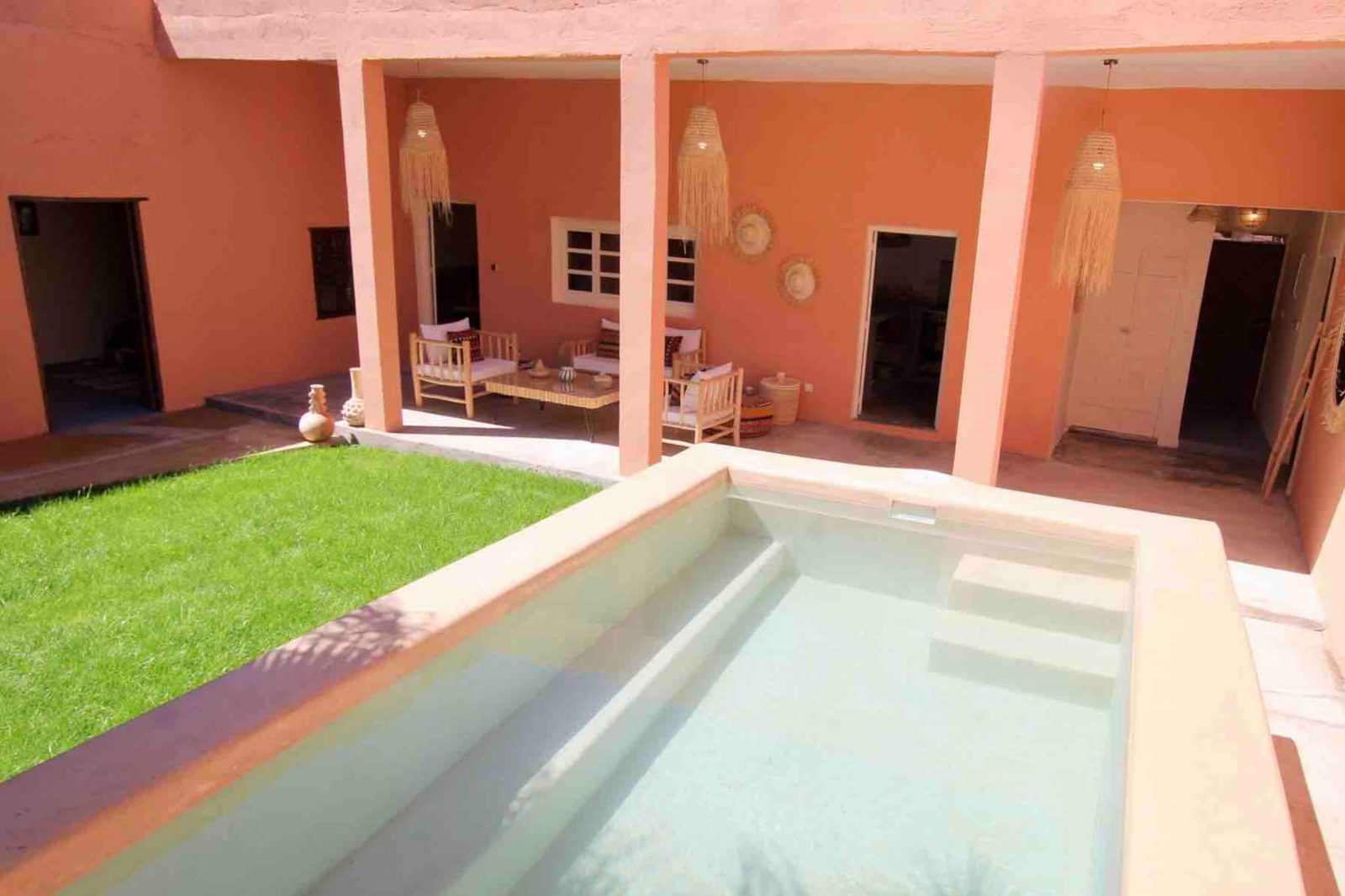
September is the best month of the year in Marrakech. The air has dropped back to 32.5 degrees, pool water still holds the heat of summer, nights sit at 18.6 degrees and it rains 1.3 days in the month. April is a trap: the days are glorious and the water in an unheated pool hovers around 18 to 22 degrees.
The table, unrounded
Official NOAA normals for 1991 to 2020. Rain days count days with more than one millimetre.
Annual total: 221 millimetres and 29 rain days. Plenty of sites quote 61 days: they are counting the faintest trace. For someone about to book, the useful figure is 29.
Absolute records on file: 49.6 degrees in July and minus 3.6 in January. Frost happens, a few nights a winter, more often on the outskirts than in the medina.
Water temperature, and why nobody talks about it
Search for "water temperature in Marrakech" and you will land on tables that describe the sea, so Agadir or Essaouira, 250 kilometres away. No published measurement series exists for an outdoor pool in Marrakech.
Only two figures hold up:
- 18 to 22 degrees in April for an unheated pool;
- a window usable without heating from late May to early October.
And one piece of indirect proof worth more than any advertised number: the whole Marrakech hotel trade heats its pools from October to April. Nobody would spend that energy seven months a year if the water were naturally swimmable.
The two asymmetries to know about
A pool follows the air with two to three weeks of lag, and the lag does not work the same way in both seasons.
In spring, the water is behind the air. That is what makes April and early May consistently disappointing. You look at the thermometer, you see 26 degrees, you put on a swimsuit, you get out again after four minutes.
In autumn, the water is ahead of the air. September and early October live off the inertia of summer. It is the one moment in the year when everything lines up.
A technical detail landlords keep quiet
Above 28 degrees, water becomes a friendly place for bacteria and chlorine loses much of its disinfecting power, with a sharp fall from 30 upwards. In July and August, an open pool in Marrakech crosses both thresholds. Water treatment stops being optional and becomes a daily job. If you are renting in high summer, that is a fair question to put to your host.
Another effect few people know about: dry air is the biggest single source of heat loss. With 47% humidity in July and a clear night sky, an open pool loses a large share of its daily gain every night. That is why a simple bubble cover laid on in the evening buys several degrees in the shoulder seasons, at a cost nowhere near that of heating.
The three French holiday windows
Easter holidays, late March to mid April
Air at 23.6 then 25.7 degrees, 9 hours of sun, 3 to 5 rain days. Glorious for sightseeing, poor for the pool. It is the window where the gap between expectation and reality is widest, and it is where most disappointed shoulder season reviews come from.
Pack a jumper. The April low is 12.4 degrees: after a day at 26, terrace evenings turn distinctly cold.
Toussaint half term, late October to early November
Air from 28.5 down to 23.1 degrees, lovely for walking the medina and for the Atlas. The water is lukewarm at the very start and cold from mid November. An excellent time to travel, a poor window for a pool argument.
Christmas and New Year
Mild, bright days at 20 degrees, cold nights at 7 then 6 degrees, frost possible. The water sits around 13 degrees: the pool is decorative. What counts in this period is indoor heating, and that is what the reviews say.
The chergui, the wind you do not see coming
The chergui is a very hot, very dry easterly, born behind the Atlas and coming back down onto the plain stripped of all moisture. It blows mostly in July and August, peaking during the 40 to 50 days that follow the summer solstice.
Its effect: the temperature can climb 10 degrees in a few hours and pass 45. The air fills with sand dust and nights stay hot for the length of the episode. A terrace becomes unusable during the day, sleep suffers without air conditioning, and pool evaporation runs away.
You cannot forecast it three months out. You manage it: stay indoors or in the water, push outings to sunrise and sunset.
What we recommend, by purpose
- You are coming for the pool and the rest: September, then June, then early October.
- You are coming to see the city: March to May, October and November.
- You are coming with children: September and October, then April to early June while accepting that the pool will be cold.
- You are coming for the Atlas or the desert: March to May and September to November. June to August passes 45 degrees in the desert.
- You are after a low price: January is the cheapest month both to fly and on the ground, and July to August is a lull in visitor numbers despite the heat. A private pool is exactly what makes that period liveable.
The only month where the pool, the city, the mountains and the desert all line up is September. If you get to choose your dates, take it.